
A homeowner newsletter remains one of the most reliable ways for HOAs to keep residents informed and connected. It helps the board share important updates, explain decisions, and highlight what is happening in the community. When done right, a newsletter can be one of the most effective communication tools in a board’s arsenal.
What is a Homeowner Newsletter?

Many associations rely on meetings, emails, or word of mouth to spread information, but those methods don’t always reach everyone. Worse yet, they can disseminate incomplete information, resulting in misunderstandings.
Homeowners association newsletters are regularly distributed publications that serve as a direct means of communication between the board and residents. A newsletter offers a central place for reminders, announcements, upcoming events, policies, maintenance work, and even positive community highlights. It supports transparency, builds trust, and helps instill a strong sense of community and unity.
The Importance of HOA Newsletters
Some associations may be hesitant to include newsletters among their communication tools. Since newsletters take more time and effort to produce, they can turn off many self-managed boards. But they also offer many benefits that make the work worthwhile.
- Convenience. Newsletters are not only convenient for boards but also for homeowners. Adding a section for announcements makes it easier to relay news and reminders to everyone in the community. That said, newsletters should never replace official notices.
- Involvement. Newsletters can include a section dedicated to homeowner announcements, serving as a kind of bulletin board. Through this, homeowners can submit posts, with the board screening each submission before publishing. Residents can invite neighbors to parties, greet someone on their birthday, or advertise a yard sale through a simple post.
- Added Revenue. Associations can allocate a portion of the newsletter for ads. Local establishments can pay fees to advertise products, sales, or services. This is an easy and low-cost way to earn extra income.
What to Include in an HOA Newsletter?
The best HOA newsletters are simple, informative, and engaging. They keep readership numbers high by offering value. Keep in mind that newsletters are not magazines, so they don’t have to be long. Taking a direct approach and reducing unnecessary information is a good idea.
That said, here are the essential items to include in a newsletter:
- Date published
- Issue and volume number
- A brief overview of the newsletter’s contents
- Greetings from the board or the president
- Insightful articles
- Relevant news about residents or the local area
- Frequently asked questions with answers
- Contact information of board members, the manager, and the newsletter editor
To minimize work and simplify production, it is best to create an HOA newsletter template. From there, the association can use it repeatedly by simply slotting in information and photos.
Top HOA Newsletter Ideas for Articles
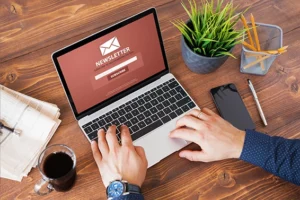
With newsletters, many associations struggle to keep content and media coming. Here are some ideas for content for a homeowner newsletter.
1. Informative Articles
Consider publishing articles that educate and enlighten. Examples include maintenance tips, safety reminders, gardening tips, and how-to guides. These types of articles offer insight to homeowners, making them valuable to their daily routine.
2. Policy Articles
Meetings are generally where homeowners learn about policy updates, but not everyone has time to attend. In addition to official notices, the board should include a section in the newsletter that discusses rule changes. This will help owners avoid violations due to ignorance.
3. Event Articles
Many associations organize events and community activities, and the newsletter is a great way to market them. Give details about upcoming events to entice residents to attend. It’s also a good idea to highlight past events with recaps and photos. This way, everyone can witness the success of the events and be encouraged to join similar ones in the future.
4. Local News
Relevant local news is another great addition to the homeowner newsletter. Talk about any recent stories that may affect the association, its residents, or the community at large. That way, if owners don’t watch or read the news, they can at least get a brief summary in the newsletter.
5. Personal Articles
To make newsletters more personal, consider dedicating a section to highlight community residents. Write a feature on residents’ stories, achievements, or favorite quotes. Perhaps someone recently celebrated a milestone in their life, career, or personal relationship.
While the newsletter keeps residents up to date, adding these fluff pieces can foster a sense of belonging and camaraderie among owners. Through this, they can get to know each other and bond even if it’s just through a piece of paper.
Homeowner Newsletter: Printed or Electronic?
In the past, newsletters were always printed. When technology evolved, there was a veritable shift to electronic formats. In fact, many companies and brands now distribute newsletters strictly via email. The question is, should homeowners associations follow suit?
The answer largely depends on the association’s needs and demographics. Printed newsletters are a tangible way to connect with the community and learn information. Some even prefer physical copies because they allow them to disengage from the digital world.
Yet cost and waste are major downsides of printed newsletters. Printing copies upon copies of newsletters costs money, and not everyone is guaranteed to read them anyway. Residents might even chuck them straight in the bin without so much as a second glance.
Not only is this wasteful, but it’s also not eco-friendly. Paper consumption has, in fact, increased considerably in the past few decades alone. Additionally, paper makes up around 26% of all landfill waste. It also takes thousands of gallons of water to produce paper products.
E-newsletters, on the other hand, are both sustainable and affordable. They don’t require paper or postage, making them more cost-effective. It also makes distribution easier, as HOAs don’t need to mail anything or go door-to-door. Once finalized, they can simply be sent to the email list. Boards can even post it online. All it really takes are HOA newsletter templates, good content, and an internet connection.
Of course, it is important to take the community’s demographics into account as well. Elderly residents may not be as tech-savvy and prefer to have physical copies. Consider offering a mix of both printed and electronic newsletters to keep costs down while maintaining accessibility.
Professional Assistance
With a standard template and a consistent content flow, a homeowner newsletter is relatively easy to prepare. That said, it can be tedious and repetitive work, which is why many HOAs seek admin help from professionals.
National Realty Partners is a leading provider of HOA management services in Virginia. We can help your board manage and enforce the rules. Call us today at 703-435-3800 or request a proposal online!
RELATED ARTICLES:
- The Impact Of Slow Mail Delivery To HOAs And Homeowners
- A Step-By-Step Guide To HOA Transition From Developer Control
- Reasonable Accommodation In HOAs: Why The Board Should Be Compliant