
HOA parking rules are some of the most debated issues in community associations. Parking spaces are often limited, leading to disagreements when residents or guests fail to follow the rules. With clear policies, an association can help prevent conflicts.
Are HOA Parking Rules Legal and Enforceable?
One of the most common HOA parking issues is whether the association has the authority to regulate parking. In most cases, the answer is yes. If the governing documents give the board authority to regulate common areas, they can create and enforce HOA parking rules.
The rules must align with state laws and the association’s CC&Rs and bylaws. The board must also ensure these rules are reasonable and enforced consistently. Furthermore, the association must clearly communicate these rules to everyone.
 Common HOA Rules on Parking
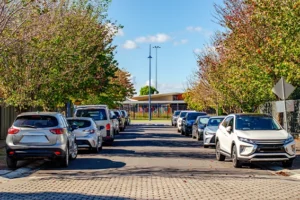 Common HOA Rules on Parking
Homeowners association parking rules can vary from one community to another. Some communities focus on maintaining the look of the neighborhood, while others address space limitations.
Regardless of the reason, most associations adopt similar types of rules. These include vehicle limitations, parking location, duration of parking, and guest parking. Let’s break them down below.
1. Vehicle Limitations
Associations often regulate the type of vehicles that owners can park within the community. For instance, some associations restrict commercial trucks, trailers, RVs, and boats.
The goal is to prevent oversized or unsightly vehicles, as these can block views and negatively impact property values. Many associations also require that all resident vehicles display current registration and tags.
2. Parking Location
It is common for associations to enforce rules on where residents and guests can park. Associations may prohibit parking on grass, sidewalks, or fire lanes.
Additionally, they might designate specific areas for guests or reserve spots for emergency vehicles. Some communities assign spaces to each unit, while others allow open parking but limit where owners can place their cars.
3. Duration of Parking
Parking rules often include limits on how long a vehicle can stay in one spot. A HOA parking policy might prohibit leaving vehicles unattended for more than 48 or 72 hours.
Associations do this in an effort to limit abandoned vehicles. Abandoned or inoperable cars tend to be unsightly and can create clutter within the neighborhood. These rules can prevent long-term storage of vehicles in common areas.
4. Guest Parking
Guest parking is another area where associations set restrictions. To keep spaces available for visitors, boards can require passes. They can also limit overnight stays.
Additionally, boards might require homeowners to register guest vehicles with the management office. Such a requirement helps keep track of guests in the community and promotes better security as well.
Street Parking in HOA Community
Street parking is often the most complex issue for communities. Whether the association can control it depends on who owns the streets.
Can the HOA Put Parking Restrictions on City Streets?
If the streets within the community are public and maintained by the city, the association usually can’t regulate parking there. Only the local government can impose rules on city-owned streets.
That said, an association may still encourage compliance with community standards. Still, the authority of enforcement rests with the municipality.
Restrictions on Private Streets
Private streets, which the association maintains, fall under the authority of the HOA. Boards have the power to set rules, provided they are consistent with the governing documents.
For private streets, the association can limit parking, designate guest areas, and even ban certain vehicles altogether. Since the association is responsible for maintenance, it also controls the usage of the streets.
Strategies for HOA Parking Enforcement
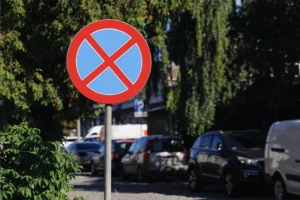 Strategies for HOA Parking Enforcement
Even with clear rules, parking problems can still crop up. Board members can mitigate these issues by implementing practical strategies for enforcing parking rules.
These strategies include using proper signage, providing warnings to violators, notifying residents of rule changes, and applying penalties consistently. Let’s break these down below.
1. Use Signage
Clear signage can help remind residents and guests of the rules. The association should post signs at entrances and in parking areas to prevent disputes.
These signs must remain visible at all times. They must also align with the law and be easy to understand.
2. Provide Warnings
Instead of immediately penalizing residents, boards can issue warnings for first-time violations. Warnings allow owners to correct mistakes without facing financial penalties.
Board members should issue warnings in writing. This way, the board can create a paper trail and keep track of repeated violations.
3. Notify Residents of the Parking Policy
Communication is key. Boards should include parking reminders in newsletters, post updates on the community website, and distribute notices before adopting new rules.
A written copy of the parking policy helps ensure that homeowners understand what they can and can’t do. This also allows the association to defend itself if a homeowner claims they were unaware of the rules.
4. Apply Penalties
If residents continue to violate parking rules, the association can impose penalties. These may include fines, suspension of amenities, or loss of parking privileges.
Before applying penalties, of course, the board must give proper notice and an opportunity to be heard. In Virginia, this due process is required by law (Section 55.1-1819). Most governing documents consist of similar requirements and procedures.
Can the Association Tow Vehicles?
In many states, associations can tow vehicles that violate rules, but they must follow specific legal procedures. In Virginia, Section 55.1-1819 allows associations to enforce regulations if the governing documents clearly state them.
Additionally, associations must also comply with state and local towing laws. Most of these laws require proper notice and signage.
For example, Virginia law requires the posting of clear towing signs at all entrances to private property where towing will occur (Section 46.2-1231). These signs must state the conditions for towing, the name of the towing company, and a phone number to retrieve the vehicle.
When the association fails to post proper signage, it exposes itself to legal liability. Before towing, boards should ensure they have the authority to do so under the governing documents. Plus, they should follow due process.
Other than that, it is best practice to provide homeowners with a written warning before taking any action. The exception to this is if the vehicle poses an immediate safety risk.
A Helping Hand
Parking rules play a vital role in keeping communities accessible, safe, and orderly. All of these things have a direct impact on the quality of life and property values. Navigating parking rules can be challenging, especially when they involve legal implications. This is where professional help comes in.
National Realty Partners is a leading provider of association management services in Virginia. We can help your board manage parking restrictions. Call us today at 703-435-3800 or request a proposal online to get started!
RELATED ARTICLES:
- Crossing The Line: Unenforceable HOA Rules In Virginia
- The Backbone Of Any HOA: Why Governing Documents Matter
- A Step-By-Step Guide To HOA Transition From Developer Control