
An HOA sidewalk can create safety concerns, maintenance obligations, and legal liability when it falls into disrepair. Boards often struggle to determine who is responsible for inspections, repairs, and injury claims. Understanding sidewalk ownership and maintenance duties can help associations reduce risks and avoid disputes.
What is an HOA Sidewalk?
An HOA sidewalk is any sidewalk located within or serving an HOA or condo community. These sidewalks can exist along streets, between homes, around amenities, or within common areas.
Not all sidewalks in an HOA belong to the association. Some are part of common areas owned by the HOA, while others may fall under municipal ownership or homeowner responsibility. The governing documents will usually determine who must maintain and repair a particular sidewalk.
Is HOA Responsible for Sidewalks?
Who is responsible for HOA sidewalk maintenance? The answer depends on sidewalk ownership. Generally, the person or entity that owns the sidewalk is liable for maintenance.
To determine ownership, it is important to check the association’s governing documents, particularly the community plat and the CC&Rs. Other things to check include municipal ordinances, property surveys, and title documents. If the answer remains unclear, it may help to contact the local public works department.
Who Owns the Sidewalk in Front of My House?
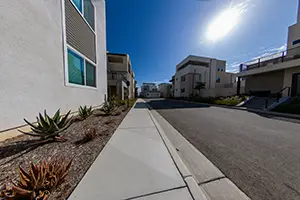
To find out who owns a particular sidewalk, boards and residents must check local laws and the governing documents. In general, ownership can fall to one of three possibilities: the HOA, the individual homeowner, or the local government.
The HOA
If the sidewalk sits in a common area, then the association is typically responsible for maintenance and repairs. These often include sidewalks that surround clubhouses, pools, parks, playgrounds, and other shared amenities.
When the HOA owns or maintains these areas, the board must conduct regular inspections and immediately repair any hazards. The board must also allocate funds in the budget for sidewalk maintenance. Beyond that, the association is responsible for reducing safety risks associated with the sidewalk.
Individual Homeowners
Some governing documents assign sidewalk maintenance to homeowners. This usually occurs when sidewalks are located directly in front of or adjacent to individual lots.
In these communities, owners are often responsible for keeping the sidewalk clean and free of any debris. Owners must also repair any cracks or damage, remove snow and ice when necessary, and prevent trip hazards.
Local Government
In some communities, sidewalks are considered public property. This means that the city or county is responsible for repairs and maintenance. Even if a sidewalk runs through an HOA, the municipality may own it.
The board should verify ownership before approving repairs or assuming liability. Not only will the board save on costs this way, but it will also ensure the association doesn’t make any repairs to public infrastructure, as that can create problems.
Who is Responsible for Fixing the Sidewalk in Front of My House?
Again, responsibility will ultimately depend on who owns the sidewalk, as determined by local laws and the association’s governing documents.
If the Sidewalk is in a Public Right-of-Way
Many municipalities require adjacent homeowners to maintain or repair sidewalks, even if the government owns them. For example, a city may require owners to repair trip hazards, issue notices for damaged sidewalks, fine owners who fail to make repairs, or perform the repair and bill the owner. In other municipalities, the city handles repairs itself.
If the Sidewalk is HOA Property
The association is usually responsible for repairs if the sidewalk is part of the common area. The board should inspect sidewalks regularly, budget for repairs and replacement, and address safety hazards promptly. Funding typically comes from regular dues that all owners must pay.
If the Governing Documents Assign Responsibility to Owners
Some associations require homeowners to maintain sidewalks adjacent to their lots, even if the HOA owns the common area or holds an easement. In these communities, owners may be responsible for repairing cracks, replacing damaged sections, removing snow and ice, and keeping sidewalks free of obstructions.
Can I Sue My HOA for Sidewalk Slip and Fall?

Residents and guests can sue the association for HOA sidewalk injuries. Liability will often depend on whether the association had responsibility for the sidewalk and whether it acted reasonably in maintaining it.
To establish negligence, an injured party typically must demonstrate a few things:
- The association had a duty to maintain the sidewalk,
- A dangerous condition existed
- The board knew or should have known about the condition,
- The association failed to address the problem, and
- This condition caused an injury.
Not every sidewalk accident automatically results in liability for the association. Courts often examine the specific facts of each case.
How to Reduce HOA Sidewalk Liability
Without proactive management, sidewalks can expose the association to legal issues. Here are the practical steps boards can take to limit liability.
1. Follow a Written Inspection Schedule
Boards should develop and consistently follow a formal schedule for inspecting common areas, including sidewalks. This will help board members identify any hazards before they worsen and pose serious problems. When conducting routine inspections, it is equally important to document all findings.
2. Address Reported Hazards Promptly
If regular inspections reveal any reported damage, boards should address it as soon as possible, especially if it is significant or poses a safety hazard. Cracked concrete, uneven sidewalk sections, tree-root damage, drainage problems, snow and ice, and poor lighting are all common examples.
Of course, inspections may not always spotlight HOA sidewalk problems. Sometimes, they can come from resident reports. To support this system, associations should develop a simple way for residents to file service requests. Typical methods include online portals, emails, and maintenance request forms.
3. Maintain Adequate Insurance Coverage
Many associations carry general liability insurance that may cover certain sidewalk injury claims. Coverage usually depends on several factors, including the policy terms, the circumstances of the accident, and whether the HOA was negligent. Some policies also have exclusions.
Insurance is important as it can help cover legal defense costs, settlements, or judgments. Boards should review their insurance coverage regularly and consult their insurance agent. This will help identify any potential gaps.
4. Keep Detailed Maintenance Records
Board members should maintain proper and consistent documentation. These records can help in the association’s defense should liability claims arise. Records of inspections, complaints, repairs, and contractor work should all be retained for at least 7 years.
5. Communicate Repair Schedules to Residents
If HOA sidewalk repairs will cause a disruption to the community, boards should communicate them with residents early on. A blocked or unusable sidewalk, for instance, may force residents to reroute. Significant construction work can also result in road closures. Moreover, some repairs can be noisy, so proper communication can help set expectations and reduce complaints.
6. Fund Reserves for Sidewalk Replacement Projects
Sidewalks will eventually require major repairs or replacement. By factoring them into the reserve plan, boards can prepare for these expenses in advance.
A reserve study can determine how much the association will need when sidewalks reach the end of their useful life. In Virginia, associations are required to conduct a reserve study as per Section 55.1-1826 (for HOAs) and Section 55.1-1965 (for condos).
7. Work With Qualified Contractors
Associations should only hire licensed and insured contractors for sidewalk maintenance and repairs. A professional contractor can evaluate the current condition of the sidewalk, recommend and make appropriate repairs, and ensure the association complies with local standards.
An Ongoing Effort

Navigating HOA sidewalk maintenance and liability can be a tricky endeavor. It begins with determining responsibility, and everything else will follow. Still, the board must take proactive steps to ensure all HOA-owned sidewalks remain clean, functional, and free from liability.
National Realty Partners is a leading provider of HOA management services in Virginia. We can help your board with common area maintenance and risk management. Call us today at 703-435-3800 or request a proposal online!
RELATED ARTICLES:
- Solar Panels In Virginia: Can The HOA Prohibit Installation?
- HOA Trash Can Rules: Reasonable Regulations And Enforcement
- Leak Issues: Who Is Responsible For Pipes In Condo Walls?