
Condo smoking rules exist to maintain property conditions and protect residents’ health. When a violation takes place, the condo board must understand how to proceed in accordance with state laws and its governing documents. Failure to do so can result in potential liability exposure.
The Purpose of Condo Smoking Rules
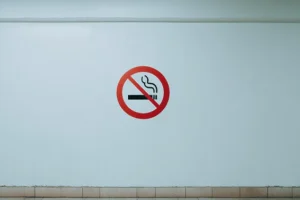
It has been scientifically proven that smoking has a negative impact on health, and global campaigns have made this fact very well known. And while the number of smokers has decreased significantly over the years, millions of people in the United States still continue to smoke.
Today, anti-smoking policies are prevalent, with many establishments following suit and prohibiting smoking altogether. In residential communities, particularly condominiums, the issue of smoking is still apparent. Condo smoking complaints are quite common, pushing boards to enact and enforce strict rules.
Health is a chief concern. Smoking not only affects the health of the smoker but also those around them. No amount of secondhand smoke is safe, and it can lead to coronary heart disease, stroke, and lung cancer. That said, health isn’t the only issue.
For condominiums, smoking isn’t acceptable because it can cause property damage in the long run. Smoke can cause deterioration and discoloration, thereby impacting curb appeal. There’s also the odor, as tobacco smoke is highly pungent and travels easily between units.
Condo smoking rules help control not only the act but also its negative effects on the community at large. Still, board members must understand whether smoking rules are even enforceable in the first place and, if so, how to enforce them properly.
Are No Smoking Rules in Condos Enforceable?
Whether or not a condo association can enforce smoking rules or even a smoking ban depends on state laws and the governing documents. In Virginia, Section 55.1-1960.1 clearly states that the board has the authority to create smoking rules in condominiums. This includes the power to ban smoking in common areas (such as hallways, elevators, clubhouses, and other shared spaces) and in individual units.
The only exception to this rule is if the governing documents say otherwise. If the CC&Rs and bylaws are silent, the board may adopt a rule making the entire condominium building smoke-free, including private units.
How to Enforce Condo Smoking Rules

Enacting smoking rules in a condo is one thing, but they are useless if the board doesn’t enforce them consistently. Here are the steps to enforce condo smoking rules.
1. Investigate Complaints or Alleged Violations
There are several ways the condo board may discover a violation. They might find it during a routine inspection or through a complaint about a condo neighbor smoking. Whatever the source, the board must first investigate to confirm whether a violation has truly transpired. Documenting evidence at this stage is crucial to support the enforcement.
2. Send a Violation Notice
According to Section 55.1-1959, before the association takes any action against the owner, it must first send notice of the violation and give the owner an opportunity to remedy it. If the owner fails to correct the violation, the condo may proceed with the next steps.
3. Hold a Disciplinary Hearing
In Virginia, condo associations must allow owners to appear before the board before taking any action against them for a violation. The law clearly states that the violation notice should include details of the hearing and be sent 14 days in advance, by hand delivery or U.S. mail.
At this hearing, the owner can present their case, along with supporting evidence, to the board. The condo board must then decide whether to proceed with a penalty. The decision must be delivered to the owner within seven days of the hearing via hand delivery of U.S. mail.
4. Impose the Penalty or Punishment
Depending on the governing documents, a condo association may impose a fine or suspend the owner’s privileges as a penalty. Section 55.1-1959 caps fines at $50 for a single offense and $10 per diem for continuing violations. These fines may be treated as assessments according to Virginia law, which means nonpayment can result in liens and foreclosure.
As for suspensions, a COA may temporarily suspend an owner’s privileges, including their access to facilities and services. Typically, owners receive these privileges back upon correction of the violation.
5. Document Everything
Board members must remember to document every step of the enforcement process. This helps leave a paper trail, which the board can use as a reference for future decisions. Documentation also helps protect the association in the event of legal action.
6. Monitor for Repeat Violations
Smokers are likely going to smoke again, so board members should monitor for any repeat violations. Typically, associations impose a higher penalty for repeat offenses, but it ultimately depends on the governing documents. When in doubt, condo boards should consult legal counsel.
7. Consider Mediation
Ongoing offenses can create a lot of tension within the community. They raise the question of whether enforcement efforts even have the intended effect of deterring violations. If an association finds that smoking remains a persistent issue, it should consider alternative dispute resolution, such as mediation.
While taking legal action is a real option, it can be very time-consuming and expensive. Mediation is a more expedient and cost-effective solution. With mediation, a third-party neutral considers both sides and helps the parties involved reach a compromise.
How to Address a Condo Smoking Issue

Condo boards have the difficult task of trying to balance the needs of the community with the desires of smokers. If a condo has a large smoker population, it may face more complaints and violations, as well as calls to change its no-smoking rules. Boards may find themselves pressured into allowing smoking to avoid conflict.
Yet, banning smoking may still be the right choice for the condominium. Smoking not only has adverse health effects, but it can also inflict long-term damage and cause nuisances to residents. Not to mention that potential buyers may be turned off by a condominium that so freely allows smoking.
To reach a middle ground, condo boards might consider establishing designated smoking areas (DSAs). When choosing DSAs, condo boards must go for open spaces or sufficiently ventilated areas. Designated smoking areas should also never be within 10 meters of entrances, exits, or air intakes.
Avoiding Legal Risks
Condo smoking rules help maintain a clean and healthy environment for residents, yet many boards run into problems when enforcing them. The key is to follow due process in accordance with state laws and the governing documents. This way, boards can ensure consistent and fair enforcement, thereby avoiding liability.
National Realty Partners is a leading provider of condo management services in Virginia. We can help your board manage and enforce the rules. Call us today at 703-435-3800 or request a proposal online!
RELATED ARTICLES:
- Mold In Condo, Who Is Responsible?
- Condo Repair And Maintenance Guide: Who’s Responsible?
- How Important Is Condo Management To A Condo Community?