
More and more homeowners are investing in solar panels in Virginia. Yet, those living in HOA communities must think twice before proceeding with installation. Many associations in the state regulate solar panels, but Virginia law explicitly prohibits any blanket bans.
Can the HOA Prohibit Solar Panels in Virginia?
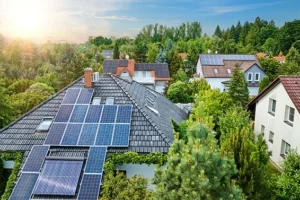
Homeowners associations are known for enforcing strict architectural rules. When it comes to solar panels, state laws do have a say. According to Section 55.1-1820.1 (for HOAs) and Section 55.1-1951.1 (for condos), associations can’t prohibit owners from installing solar panels on their properties if the CC&Rs are silent.
This means that the CC&Rs or declaration must already explicitly ban them if an association were to enforce such a prohibition. If it doesn’t specifically prohibit solar panels, the association can’t impose a new blanket ban out of nowhere.
That said, the HOA can set reasonable rules about:
- The size of the system,
- The placement or location of the system, and
- How it must be installed.
For example, they may regulate placement for safety or structural reasons. It is important that homeowners refer to their governing documents for more specific guidelines.
Virginia Solar Panel HOA Laws: What Counts as Unreasonable?
While Virginia law does allow restrictions on solar panels, these restrictions must be reasonable. A rule is considered unreasonable if it does either of these things:
- Increases the installation cost by more than 5 percent compared to the owner’s original plan, or
- Reduces the system’s energy output by more than 10 percent compared to the owner’s original plan.
If the HOA requires changes that push an owner past those limits, the restriction likely violates the law. Homeowners must prove the violation if they wish to challenge the rules. To do that, they need documentation from an independent solar design specialist.
This specialist must:
- Be certified by the North American Board of Certified Energy Practitioners, and
- Be licensed in Virginia.
They must provide professional documentation showing that the association’s requirement increases costs or reduces output beyond the allowed limits.
Virginia HOA Restrictions on Solar Panels in Common Areas
While associations can’t completely prohibit solar panels on private property without a provision in the declaration, they can place a total ban on them in common elements. These usually include shared roofs, walls, clubhouses, open spaces, or any other property the association owns.
Even if the HOA allows solar devices in common areas, it can set reasonable rules about:
- The number of systems allowed,
- The size of the systems,
- Where these systems can be placed, and
- The manner of installation.
While owners have strong rights to install solar panels on their own property, those rights do not automatically extend to shared property. That said, the HOA board can choose to install solar panels in common areas for the association’s benefit or use.
Common Restrictions on HOA Solar Panels in Virginia
While outright bans on solar panels are uncommon in Virginia, most communities do place reasonable restrictions. Homeowners must follow these guidelines before proceeding with installation.
Typical restrictions include:
- Design. Solar panels must be in a specific color scheme or match the property’s design style. This is to maintain the community’s character and appearance.
- Placement. Unless efficiency is compromised, many associations require installation in less visible areas. Communities believe that clearly visible panels may interfere with the neighborhood’s aesthetic.
- Approval. In most communities, homeowners must go through an approval process before installing solar panels. They must submit a proposal, which the board will evaluate and approve based on compliance with architectural standards.
- Contractor. Associations often require owners to use a contractor who carries the proper licenses and insurance. This is to protect both the homeowner and the community.
- Safety. Homeowners may install solar panels, but they must not be a danger to residents or cause damage to properties.
How to Get Approval for Installing Solar Panels in Virginia
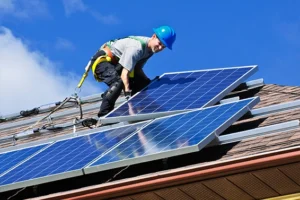
Homeowners associations generally require residents to submit an application before installing solar panels. This is in line with most architectural guidelines. While specific steps can vary, they generally involve the following:
1. Understand State Laws and Governing Documents
First, homeowners must check their state laws and governing documents. In Virginia, an association may only prohibit solar panels outright if the ban is already written into the CC&Rs. It is equally important to check any restrictions on placement, design, contractor, and safety. The rules should also specify the procedure for obtaining approval.
2. Write a Proposal
More often than not, associations require owners to submit an application or proposal for the solar panel installation. This proposal should include all pertinent information, including but not limited to:
- A plan depicting where the solar panels will be placed, with efficiency justifications,
- Photos of the sample solar panels,
- Energy production estimates that show how the solar panels will benefit the owner,
- An explanation of how the solar panels align with state laws and the association’s governing documents,
- A project timeline for installation (with estimated start and completion dates), and
- Information about the contractor, including licenses, permits, and insurance.
There are many contractors who provide assistance in crafting this proposal.
3. Be Flexible
Homeowners should not be set in their ways. The HOA board may have concerns or suggestions about the installation, so the homeowner must be ready to address them. Owners should be open to making any adjustments, such as alternative placements, that will strike a balance between owner needs and association standards.
4. Wait for Approval
After completing the proposal, it’s time to submit it to the HOA board or Architectural Review Committee. Most communities have approval timelines, but owners can also follow up on their applications. On the board’s part, it is important to respond promptly to avoid delays, increased costs, and owner frustration.
Resale Certificates in HOA and Solar Panels
According to Virginia law, any prohibitions or restrictions on solar panels must be disclosed to potential buyers. Section 55.1-1820.1 (for HOAs) and Section 55.1-1951.1 (for condos) require resale certificates to clearly identify these restrictions or prohibitions. This way, buyers know what they are getting into before closing.
Professional Assistance
Navigating the ins and outs of solar panels in Virginia can be confusing to both homeowners and board members. Homeowners should seek help from contractors, while HOA boards should rely on professionals for advice. When in doubt, hiring a lawyer or an HOA management company will help.
National Realty Partners is a leading provider of HOA management services in Virginia. We can help your board manage and enforce the rules. Call us today at 703-435-3800 or request a proposal online!
RELATED ARTICLES:
- How Strict Can HOA Holiday Decor Rules Get?
- HOA Parking Rules: Street Parking, City Streets, And Homeowner Rights
- Crossing The Line: Unenforceable HOA Rules In Virginia