
Who is responsible for pipes in condo walls? The answer is not always straightforward. Responsibility often depends on the governing documents, the pipe’s location and purpose, and whether the issue involves the leak itself or the resulting water damage. Insurance coverage can also affect how costs are divided.
Who is Responsible for Pipes in Condo Walls?
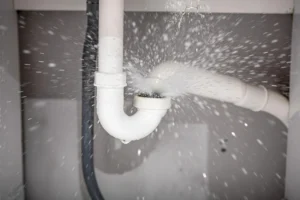
Condo pipe leaks can quickly become stressful and expensive problems. A small leak hidden behind a wall can damage flooring, drywall, cabinets, and even neighboring units. When that happens, many owners immediately ask who is responsible for pipes in condo walls.
Unfortunately, there is no universal answer that will apply to all condominiums. There are several factors that can affect responsibility. These include the governing documents, the location of the pipe, what the pipe serves, and whether there is water damage.
In most condominium communities, responsibility is shared between the condo association and the unit owner. The CC&Rs and bylaws usually explain which parts of the property belong to the association and which belong to the owner.
Condo associations are generally responsible for common elements. These are portions of the property that multiple owners share or use for the benefit of the community as a whole. Meanwhile, unit owners are typically responsible for components that serve only their own units.
Still, leaking water in condo associations can cause confusion. This is because many plumbing lines are hidden behind walls, ceilings, and floors. Owners often assume that anything inside a wall automatically belongs to the association, but this isn’t always true.
What Pipes Does the Condo Association Usually Handle?
Condo associations commonly maintain pipes that serve multiple units or function as part of the building’s shared plumbing system. These often include vertical plumbing stacks, main water supply lines, shared drain lines, and fire sprinkler pipes.
For example, a pipe running through several condos may qualify as a common element even if part of it sits behind the wall of a single unit. In that situation, the condo association usually becomes responsible for maintaining and repairing the pipe itself.
Additionally, associations also often handle plumbing located in common areas. These include facilities, hallways, and other shared spaces.
What Pipes are Usually the Owner’s Responsibility?
Unit owners are generally responsible for plumbing components that exclusively serve their units. This often includes fixture connections, sink supply lines, washing machine hoses, toilet lines, and branch pipes serving individual bathrooms or kitchens.
The governing documents usually determine where unit ownership begins and ends. Because of this, two neighboring units in the same building may experience similar leaks but have different responsibilities.
Who is Responsible for Pipes Behind Condo Walls?
One of the most common condo disputes involves pipes hidden behind walls. The location of the pipe doesn’t always determine responsibility. Instead, associations and insurers usually focus on the pipe’s function and who it serves.
A pipe inside the wall that serves only one condo may belong to the owner. A pipe in the same wall serving multiple units may belong to the association.
This distinction becomes especially important when repairs require opening walls, ceilings, or floors. The association may repair the shared pipe itself, while the owner pays to restore interior finishes inside the unit.
When Responsibility Overlaps
Many condo water leak situations involve overlapping responsibility between the association and the owner. One party may handle the plumbing repair. Meanwhile, the other handles the resulting property damage.
For example, the condo association may repair a shared pipe that burst inside a wall. The unit owner may still need to repair damaged cabinets, flooring, or paint within the condo.
The reverse can also happen. An owner may be responsible for a failed appliance hose, but the association may become involved if the water damages common areas or neighboring units.
Condo Building Water Damage vs Leak Responsibility
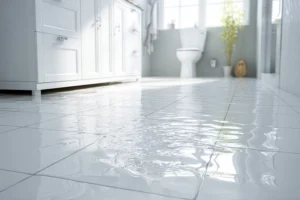
Condo owners often assume that whoever repairs the pipe must also pay for all water damage. In many communities, that is not how responsibility works.
The person or entity responsible for the plumbing component usually pays to fix the source of the leak. Yet, the responsibility for repairing damaged property may follow a different set of rules.
Many governing documents require owners to insure and maintain interior portions of their units, including flooring, drywall, cabinets, fixtures, and improvements. In these cases, the association may repair the common pipe, but the owner handles repairs to the interior finishes.
What Happens if Neighboring Units are Damaged?
Water rarely stays contained within one unit. A condominium water leak often spreads into neighboring units, ceilings below, and shared building areas.
When this happens, multiple insurance policies may become involved. The condo association’s master policy may cover certain structural portions of the building, while individual owners may rely on their HO-6 condo insurance policies for interior repairs and personal belongings.
Determining responsibility often depends on the governing documents, insurance language, and whether negligence played a role.
Who Pays for Water Damage in Condo Communities?
Many owners believe the condo association automatically pays for all leak-related damage, but this assumption is often incorrect. The association’s master insurance policy usually covers certain portions of the building structure and common elements. Coverage can vary depending on the type of policy the association carries.
Some associations carry bare walls coverage, which generally insures only the basic building structure. Under this policy, owners are usually responsible for insuring interior finishes and upgrades within their units.
Other associations carry more comprehensive coverage that may include some original fixtures or interior components. Because insurance coverage can change from one condo to another, owners should never assume the master policy covers everything inside their units.
Does Condo Insurance Cover Water Damage?
In many cases, insurance covers condo water damage. A standard HO-6 policy often covers sudden and accidental losses caused by plumbing leaks.
Coverage may help pay for repairs involving drywall, flooring, furniture, electronics, and personal belongings. Some policies also help cover temporary living expenses if the condo becomes uninhabitable during repairs. Still, coverage depends heavily on the cause of the damage.
The Role of Negligence in Determining Responsibility
Negligence can sometimes change who becomes responsible or how responsibility is divided. An owner who ignores a known plumbing problem, for instance, may become liable for the resulting damage to neighboring units or common areas.
Likewise, a condo association that delays repairing a known common pipe issue could face liability if additional damage occurs. Insurance companies often investigate whether either party acted properly after discovering the leak.
Condo Leaking Pipe in Wall, Who is Responsible? Answered!
Determining who is responsible for pipes in condo walls is rarely a simple endeavor. Responsibility may depend on who the pipe serves, what the governing documents say, and whether the issue is confined to just a leak. In many cases, both the condo association and the owner share some level of responsibility.
National Realty Partners is a leading provider of condo management services in Virginia. We can help your board manage and enforce the rules. Call us today at 703-435-3800 or request a proposal online!
RELATED ARTICLES:
- Condo Smoking Rules: Dealing With Secondhand Smoke Complaints
- Condo Repair And Maintenance Guide: Who’s Responsible?
- Mold In Condo, Who Is Responsible?